Picture81-1 (1)

Liberia: Experts Warn Mental Health Counseling Needed Across the Country as War Crimes Court Planning Gets Underway

SINJE, Grand Cape Mount County – Asata’s war experience would make anyone cry. In 1996, when she was 22 years old, Asata says a group of five older rebels from the ULIMO K faction gang raped her. She was left emotionally and physically scarred.


By Gloria Wleh with New Narratives


Before the rape Asata dreamed of having six children – three boys, three girls. But her prolapse – when the uterus falls out of place – caused by the rape, has made that impossible. After ten years of marriage and numerous miscarriages, she has just one precious child, a son, now 10. Asata has carried the rape and her injuries as a secret from everyone, including her husband.  

Until now. Psychosocial counselors came to Asata’s house last year and convinced the now 52-year-old to join a special counseling session in her community designed to help war victims deal with traumas they have carried for decades.

“I used to be sitting down whole day I be worrying and crying that I will not get children,” Asata says. The group has been a big help. “God brought the counseling team to my house.”

Asata is one of the hundreds of thousands of Liberians who experts say live with mental health problems as a result of the wars. According to the World Health Organization, one in five people exposed to trauma will develop post-traumatic stress disorder, depression, anxiety, bipolar disorders, and schizophrenia in the next decade. Evidence shows trauma can be passed down through DNA, so it is likely children born after the wars are impacted too.

Liberia has never done a comprehensive survey of the size of the problem but experts say it is likely that many Liberians are suffering silently or turning to alcohol, drugs and violence to deal with their symptoms. Experts worry that as the country begins to try those who perpetrated the horrors that left 250,000 people dead and millions injured and displaced, mental health problems will be triggered.
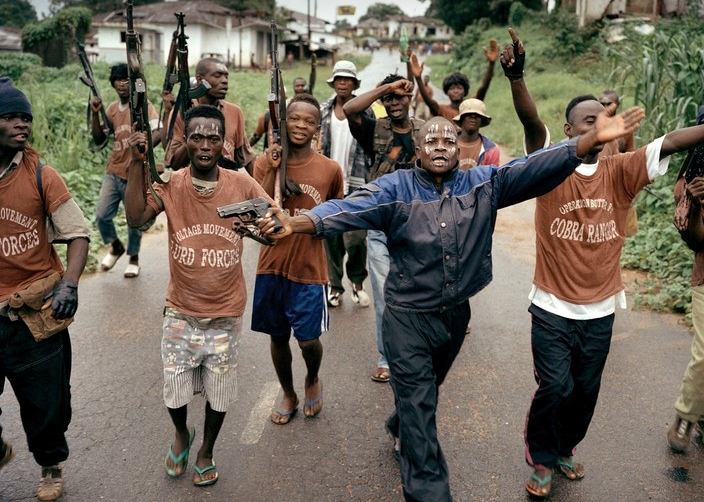
Lurd forces during the second civil war. Many of the fighters were children who took part in shocking crimes. Experts say so many Liberians were impacted by the war that post traumatic stress disorder is likely widespread among the population to this day.

“We need massive therapy sessions all across the fifteen counties,” says Seidu Swaray, executive director of the Liberia Association Psychosocial Services. “We have had too many traumatic experiences and now that we are going to the courts, people’s minds need to be prepared.”  

Swaray says the first priority must be those working on the investigations and the court to ensure they protect themselves and, importantly, witnesses.

“Almost all the judges, lawyers and all those who will be a part of the court need to be trained on basic trauma informed approaches,” says Swaray. “There are so many ways trauma affected persons who are being engaged will communicate. And if you do not have that background training, you will not know. While you think that you are helping, you are actually harming the person.”

Mental health issues are on the mind of Dr. Jallah Barbu, head of Liberia’s Office of War and Economic Crimes Court. He says his office has set up a psychosocial and mental health section to handle war related mental health issues. Barbu says his team is making plans to offer psychosocial support services to everyone during the court processes. He says his office is working closely with psychosocial services and with victims’ and survivors’ groups to come up with mental health support plans.

“We want to ensure that we manage every individual in this process,” says Barbu. “These are some of the things we are currently working on and we are opened to more collaborations and partnerships.”

Mettie Zeineddine has been appointed to head the psychosocial division at the Office. She has long experience as a mental health clinician in Liberian hospitals. She says there are existing mental health support structures setup by private psychosocial services and the government in all 15 counties in the country.

“These people have been providing services sporadically,” Madame Zeineddine says. “What we will be doing, we will be leveraging those structures.”
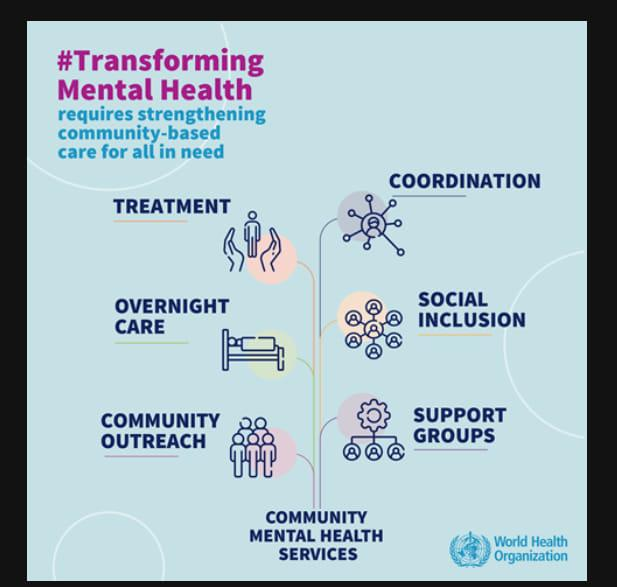
The World Health Organization recommendations for building mental health services

Funding for psychosocial support was not included in the budget that Barbu submitted to the government on May 1 for the second year’s operations of the Office. But that was before President Boakai’s surprise announcement that he had doubled the requested budget to $2 million a year. Barbu has not announced when he will reveal the new budget for the Office, but experts expect psychosocial services to be included. Local CSOs are also seeking support from donors including the European Union.

Survivors Say Counselling Is Helping Change Their Lives

Asata, (all survivor names are being withheld to protect them from stigma) has never had medical treatment for her injury. When she finally married, she and her husband spent a decade trying before she became pregnant. (Pregnancies with prolapse frequently result in miscarriages). The pregnancy and birth came with severe complications. Asata faced obstructed labor and the risk of uterine rupture. Doctors advised her not to become pregnant again, saying she could lose her life and the life of the baby.

Asata says, even 30 years later, she constantly struggles with flashbacks from the rapes, causing problems in their marriage. “Sometimes when he need me in bed, I can refuse him,” she says. “Because when that thought come to me, I can’t want him around me. I can’t want him touch me. Then it can cause problem. We can be fussing.”

Asata and dozen others are getting help here in Sinje, from a free psychosocial counseling service provided by Swaray’s association. Swaray says the sessions were taken to Cape Mount following a survey which showed that the county was one of the hotspots for massacres during the wars. Funded by the United Nations, the service is free in two counties.

The 8-week program puts the participants in a group of 10 people of the same gender, each with 2 counselors. Groups meet every week. Counsellors guide them through topics such as how people have changed because of the war, loss and grief. They also focus on happier times in an effort to build resilience.

Counselor Sarah Paye says the goal is to help participants “regain their hope, function well again and take charge of their lives.” Treatment caters to the individual’s needs. “Sometimes it takes up to 3 to 6 months, or even up to a year for a client to recover. Mental illnesses are in stages. So depending on the stage the client is at, it’s how long the treatment is going to last.”

Momo, 57, says he is also a war survivor who has been coming to these sessions in Sinje for more than six months. He says he was captured by the ULIMO-K rebels in 1996. He saw people being slaughtered and was forced to carry heavy loads for about a year.

Momo suffered a back injury that has made it difficult for him to bend over and stand up straight. He has lived that way for 29 years, with physical and mental pain. He lost his job and his wife of 11 years, leaving him alone to raise their 8 children. This made him depressed. Counseling has been a big help.

“I was down. I was really down. But since the counselors started talking to me, I gain hope again for my life,” Momo says. “I started doing my little backyard garden and from it I am taking care of my children.”
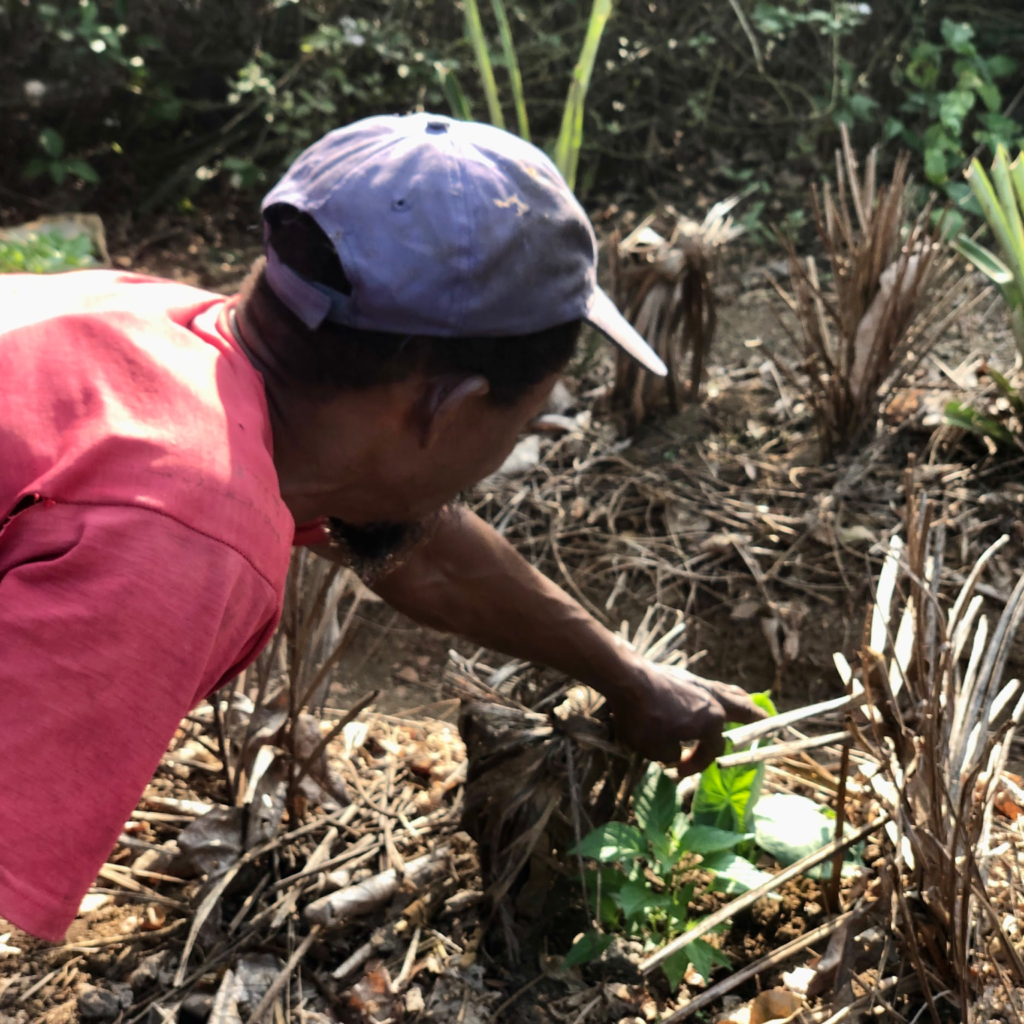
Momo tends his crops. Credit Gloria Wleh with New Narratives

Counselors persuaded Momo that what happened to him was not the end of his life. He says he now feels motivated and has found the drive to run his back yard garden and a pig poultry, where he grows and sells crops and livestock. He is also helping others. He established a local organization of farmers fighting hunger.

Psychosocial Services Needed Across the Country

Swaray says sessions like this will need to be held repeatedly across Liberia, as the War Crimes Court gets underway. He says psychosocial services need to be mainstreamed in all aspects of the courts’ processes—from investigation up to the point of judgment.

He also calls for blanket security for witnesses and their loved ones. He says failure to address this will see people targeted by the accused and it may discourage others from coming up to testify.

Momo is now an advocate for counseling services.

“Everybody some way, somehow was affected by the war,” says Momo. “The government needs to prioritize counseling. Counselors need to be sent in each and every county to help people.”     

Part one of this series looked at the challenges of treating Liberia’s mental health crisis and its role in fueling drug and alcohol abuse and crime.  

This story is a collaboration with New Narratives as part of the West Africa Justice Reporting Project. Funding was provided by the Swedish embassy in Liberia. The donor had no say in the story’s content.
Picture3-7

Liberia: Depression, Anxiety, Despair Stalk Liberians in Aftermath of Civil Wars; Experts Say Mental Illness is Hidden Crisis That Needs More Resources

ST. PAUL BRIDGE, Montserrado County –  Musu sits in a circle in a small community office here. Dozens of community members – mostly women – listen as she tells her story.


By Gloria Wleh with New Narratives


Musu was just 15 when a commander with the National Patriotic Front of Liberia took her from her home in Lofa County to be a “war wife”, like thousands of Liberian girls during the wars. For almost a year he forced her to cook, clean and have sex whenever he wanted. She says he murdered, raped and tortured many people. Ever since Musu has been unable to trust any man.

“I just feel la how all man looking,” Musu tells the group. “So to just trust man, it’s very hard for me.”

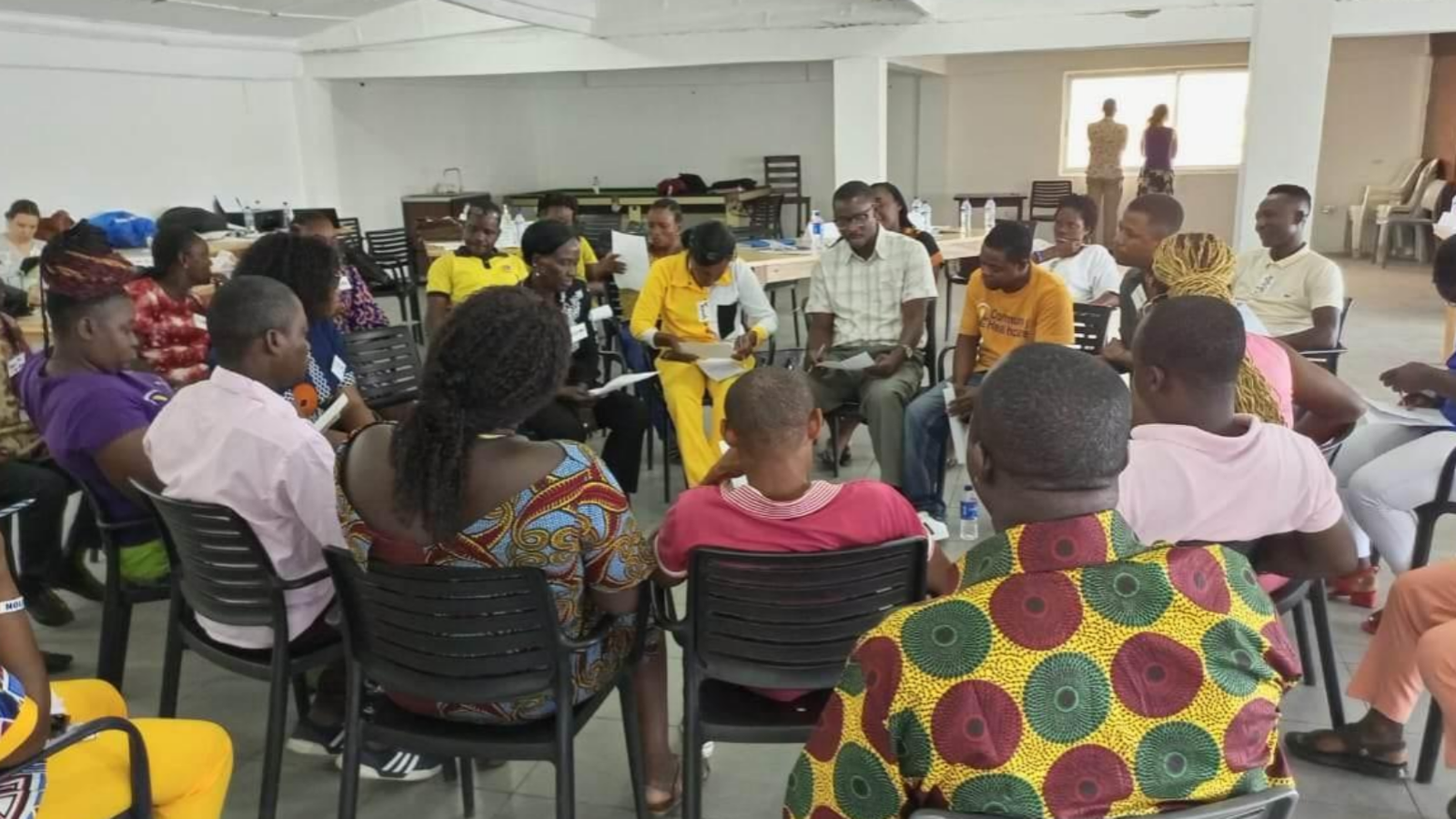
The group is one of dozens that are taking place in two counties across the country. Staff with the Liberia Association of Psychosocial Services, are going door to door in communities to encourage people to come to these group sessions in a program designed to help address the silent mental health crisis that experts say is still plaguing the country more than twenty years since the end of the war.

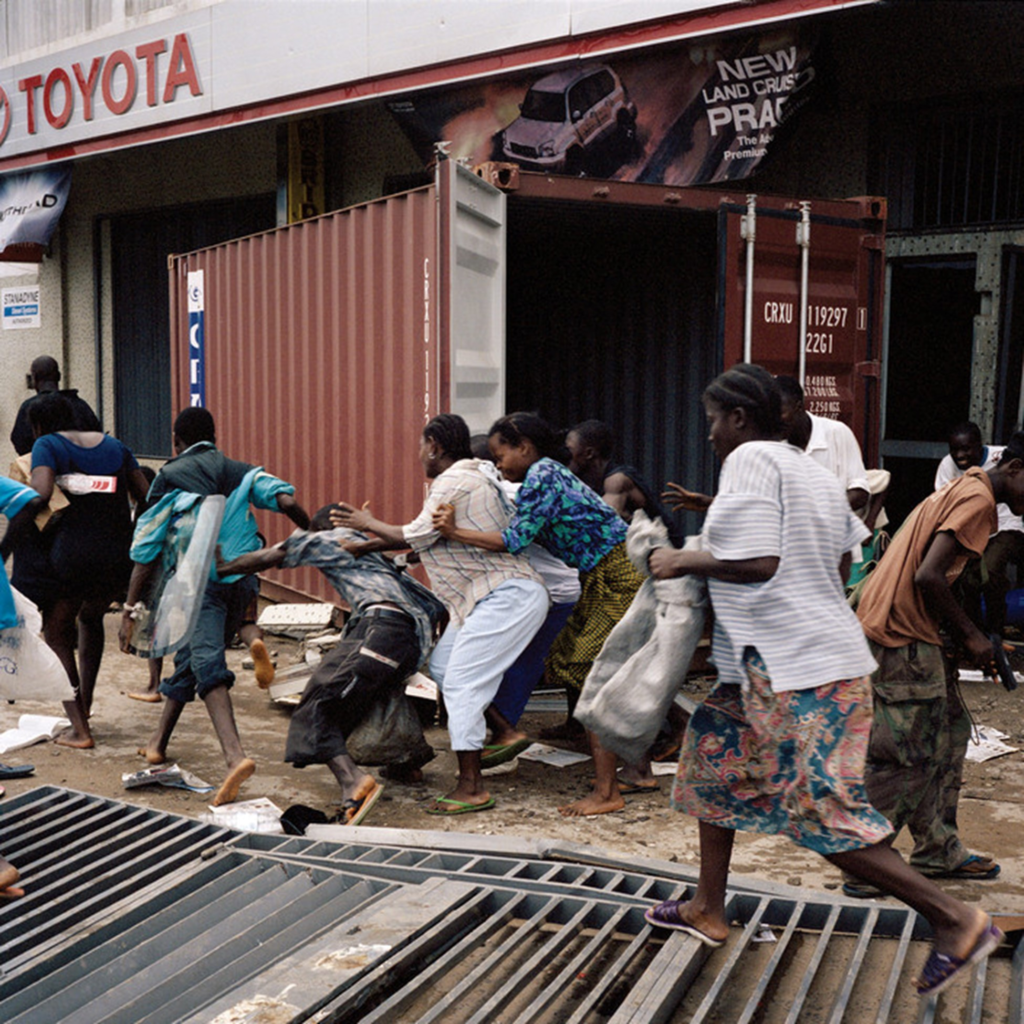
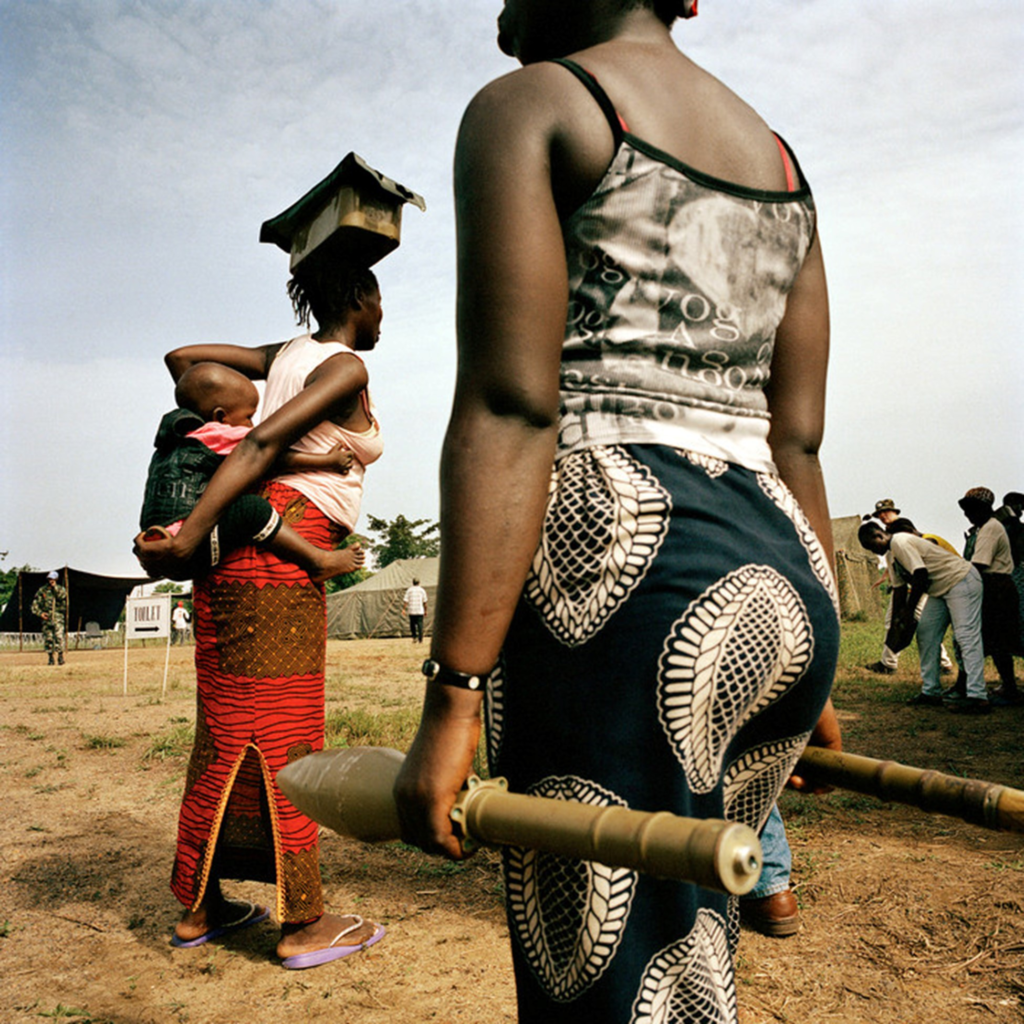
Women serving fighters during the 2003 conflict. Credit Tim Hetherington.

Musu is just one of millions of Liberians that experts say are suffering mental health problems as a result of Liberia’s long civil conflicts that began with the coup d’etat by Samuel Doe in 1980 and ended 23 bloody years later with the exile of then-president Charles Taylor. Estimates say the death toll was 250,000 people but millions more were impacted.

Most Liberians saw and endured extraordinary brutality. This has left the country with significant trauma that could lead to trouble if there is a trigger.

“It’s almost like we’re just sitting on a time bomb,” says Seidu Swaray, head of the Association. “The moment any little thing is triggered, you will see it escalate beyond our imagination.”

Messaging designed to break the stigma against mental health treatments. Credit: World Health Organization

Musu first came to this group a year ago after counselors came to her door and urged her to come. She agreed to come, she says, because she wanted to stop being angry with men. A year on she tells the group that she is seeing some changes in her life and is feeling stronger.

“This session is helping me to go around people and not to keep by myself,” Musu says. Her real name is withheld because of stigma. “I’m cooling down on my anger and I’m starting to feel fine.”

Musu, who struggles with war-related trauma, refuses to live with a man as a result. Credit: Gloria Wleh with New Narratives

According to the World Health Organization, one in five people exposed to trauma will have post-traumatic stress disorder, depression, anxiety, bipolar disorder, and schizophrenia in the next decade. That would equate to more than a million Liberians. Evidence shows trauma can be passed down through DNA so it is likely even children born after the wars are impacted too.

Untreated from the wars have left Liberians psychologically numb and quicker to anger, violence, despair and other destructive behaviors than non-impacted populations, according to experts.

And yet there has been no major effort to address Liberia’s national trauma. Experts warn it is a mistake to think that the only people who are impacted by mental illness are those with obvious problems.

“To the public out there, stop thinking that it is only people who are roaming the streets in dirty clothes, who are mentally ill,” says Mr. Swaray. “You can be a banker, you can be a businessperson, you can be a manager, or even a minister, but you’re not mentally healthy.”

True State of Liberia’s Mental Health is Unknown

Since the war, with so many crises facing the country, successive governments have not assessed the number of Liberians who are struggling with their mental health. The government made mental health support a basic human right in 2017 by passing the Mental Health Act, but there has been no survey of the size of the problem and the only support that has been available has been funded by donors.

“As a country we do not have any existing data on national prevalence of mental disorders,” says Dr. Moses Ziah, Director of the Health, Health Ministry’s Mental Health Division. He says the data coming from the WHO and others are all estimates.

Mental health experts say this is making their job more difficult.

“The implication of this is that we are having the problem, but we do not know the size of it,” says Mr. Swaray. “We don’t know what we are fighting, and this is scary.”

Dr. Benjamin Harris is Liberia’s first psychiatrist, a doctor specializing in treating mental health issues. He completed his training in England in 1982, choosing the specialty because the country did not have its own psychiatrists at the time. Today the country has just eight psychiatrists serving its over five million population. That’s one psychiatrist for every 625,000 people. The WHO recommends one psychiatrist per 10,000 people.

The lack of help is taking a toll on huge numbers of the population according to mental health experts. Dr. Harris says he sees a wide range of mental health problems every day. He named anxiety and depression as the most common. He says mental health problems show up in the growing use of alcohol and drugs which, he says, people take to numb their pain. People don’t realize they’re suffering from mental health problems and so they medicate themselves. The impact on the brain and body of alcohol and drugs can actually make the depression worse. 

“Depression is not just a feeling of sadness, it’s an illness. Those affected by it think negatively,” Dr. Harris said. Sufferers of mental illness will have a range of symptoms that can make things worse. “They have sleep difficulties. They don’t experience pleasure they used to experience before, and some of them think that there’s no point in living.”

Mr. Swaray blames escalating violence in the country on the legacy of untreated trauma from the war. “You can see how violent our streets are,” he says. “Children these days no longer fight without using weapons on each other.”

Some Liberians Are Getting Help, But Stigma is Still An Obstacle

Musu is one of the few Liberians getting help. For almost a year she has been attending therapy sessions here at the Liberia Association of Psychosocial Services. (Clients needing medication are referred to a partnering medical clinic.)

In today’s session counselor Sarah Paye tells the participants that they are not responsible for what happened to them.

“Don’t blame yourself for what happened to you,” says Madam Paye. “Be assured that you can feel better from the services we will be providing if you take charge of your healing.”

But while some are seeking help voluntarily, many, like Musu, are only benefiting from therapy sessions because the association reached out to them.

Many Liberians are still reluctant to seek mental health care.

“I think the reason is that a lot of people don’t know and understand the importance of mental health,” says Mr. Swaray. “More often, people only regard physical health to be something to look after.”

Sessions like this as well as a national conversation will be crucial in coming years says Mr. Swaray.

“It’s very, very important because our country has passed through war and too many traumatic experiences,” Swaray says. “So the war is the first huge one. Ebola, Covid, all these things have created extreme psychological wounds.”

Experts are urging that mental health services be given priority by policymakers to reach the larger population, especially as wounds are triggered by the War and Economics Crimes process.

The 2025 national budget for mental health in the country fell by 20 percent from US$500,000 in 2024.

Mr. Swaray says that is not nearly enough to address the size of the problem that he worries will only get worse as another generation becomes embittered by the horrors of the civil conflict and rising poverty makes them more desperate.  

Part two of this series will look at the impact of the WECC on Liberians’ mental health and what experts say people should do to protect themselves.

This story is a collaboration with New Narratives as part of the West Africa Justice Reporting Project. Funding was provided by the Swedish embassy in Liberia. The donor had no say in the story’s content.
image-22-1024x568

Liberia Forge Historic Justice Consensus

By Vaye Abel Lepolu 

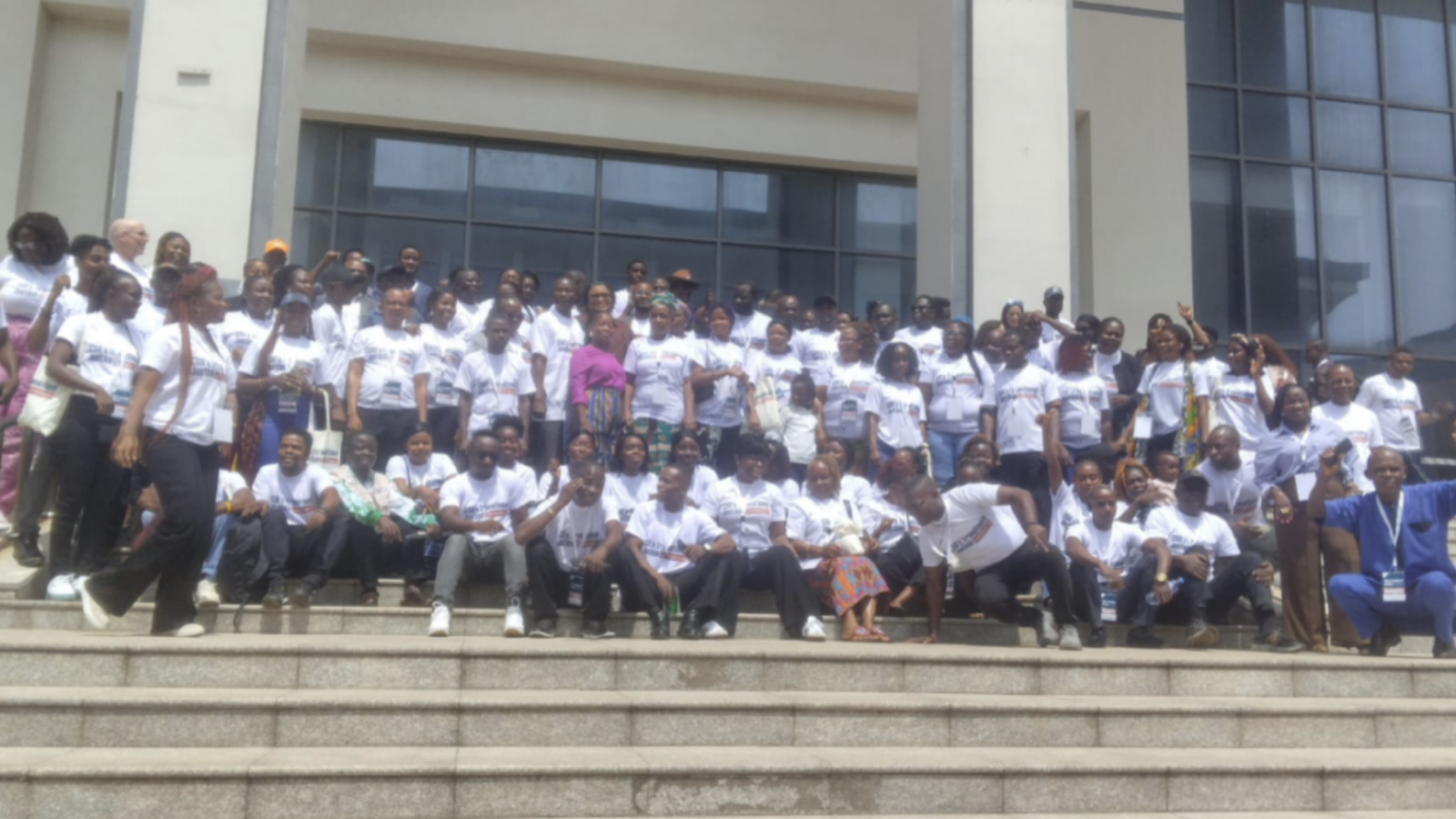
Liberia has reached a historic milestone in its long and difficult journey toward justice and national healing, following the successful conclusion of a National Conference on Transitional Justice, which brought together representatives from all 15 counties for the first time in the country’s post-war history.

The landmark gathering united civil society organizations, survivors of war, youth groups, women’s movements, traditional leaders, legal experts, government officials, and international partners under a single national platform with one shared goal,to advance justice, accountability, reparations, and reconciliation for Liberia.

Under the theme ” call to Action on Transition Justice For Liberia Now”

However, the coordinator for LCSIT  Mr. Seidu Swaray described the conference as a foundational moment in the evolution of transitional justice activism in the country a movement that has passed through many phases over the years but has now entered a new, more unified and strategic stage.

“Today, history has been made. A foundation has been laid that will shape Liberia’s transitional justice process for the next 10 to 15 years,” one of the coordinators stated. “For the first time, voices from all 15 counties have come together in unison, speaking with one voice for justice.” he said 

In further ,the conference marks a major shift from fragmented advocacy efforts toward a coordinated national movement. Over the past years, town hall meetings were held across the counties, culminating in this national convergence that produced a unified platform of recommendations and outcomes.

Participants emphasized that the process is not only about the establishment of a War and Economic Crimes Court, but about the full implementation of transitional justice mechanisms, including:

Truth-telling and historical accountability

Reparations for victims and survivors

Trauma-informed justice processes

Community healing and reconciliation

Institutional reforms

Economic justice and social repair

The conference also highlighted the importance of inclusivity, ensuring that women, youth, persons with disabilities, survivors, rural communities, and marginalized groups are fully represented in the justice process.

Meanwhile, the central outcome of the discussions was a renewed national focus on reparations, as recommended by Liberia’s Truth and Reconciliation Commission (TRC). Participants stressed that reparations are not optional, but a state responsibility, and must include medical support, psychosocial services, economic empowerment, education, and livelihood restoration for survivors and affected communities.

Civil society leaders across Liberia called for reparations to be integrated into national development planning and government budgeting processes through existing ministries and agencies, rather than treated as a distant or external program.

The conference outcomes will directly inform the design, structure, and operations of the proposed War and Economic Crimes Court. Organizers confirmed that the recommendations from the conference will be compiled into a national policy document and formally submitted to relevant national institutions, including the Office responsible for the establishment of the court.

The approach, they emphasized, will reflect Liberian realities, combining international best practices with local contexts, traditions, and community needs.

“This process will influence how the court is designed, how it operates, and how it serves the people. It will not be a foreign model imposed on Liberia, but a Liberian justice model shaped by Liberian voices,” an organizer said.

Speakers cllr .Tiawon Gongloe repeatedly stressed that justice in Liberia must go beyond legal prosecution alone. Transitional justice, they noted, must also include community-level justice, everyday accountability, ethical leadership, civic responsibility, and cultural transformation.

The hosting of the conference is a good path in towards the country Justice system and it citizens to be educated to push Justice for all Liberia and mostly especially people that has been victimized during the war.

Cllr. Gongloe highlighted the role of young people, women’s groups, market women, traditional authorities, educators, and community leaders as justice champions, responsible for spreading awareness, promoting ethical values, and modeling justice in daily life.

The conference concluded with a strong message of national ownership, emphasizing that transitional justice in Liberia must be led by Liberians for Liberians.

“This is a Liberian process. Without the voices of survivors and communities, justice will never be complete. Every person here matters. Every voice matters. Every story matters,” a closing statement declared.

All the CSO’s organization announced that the final consolidated recommendations from the conference will be shared with the public and the media in the coming weeks, forming the basis for sustained national advocacy, policy engagement, and institutional reform.

As Liberia continues its post-war recovery journey, the conference stands as a defining moment ,not just as an event, but as the foundation of a long-term national movement for justice, accountability, healing, and reconciliation.